
 Call
Call
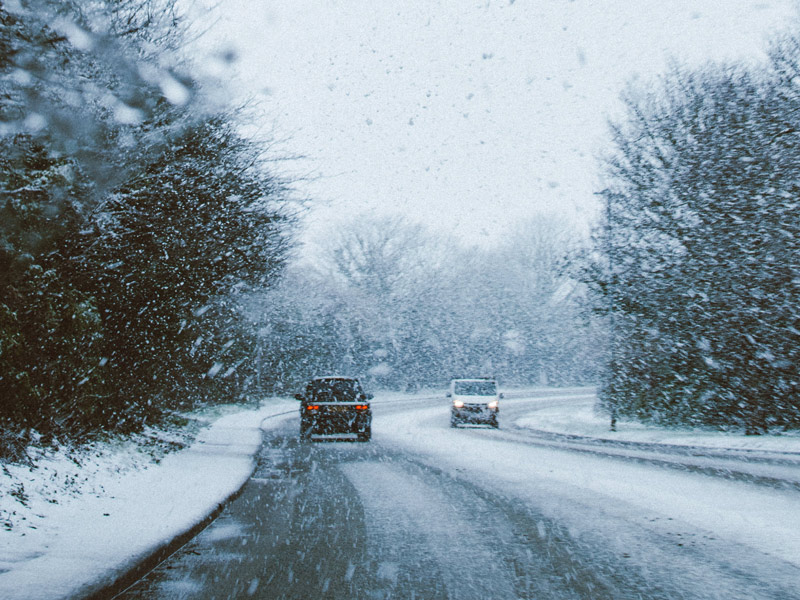
The cold, wet winter weather can take its toll on your car. Icy roads, grit, salt, and low temperatures put extra strain on components and can lead to breakdowns or accidents if you're not prepared.
With simple preventative checks and adjustments to your driving style, the good news is that you can keep motoring through the winter months with no issues. We provide more colour on winter car checks and driving tips below.
5 Essential Winter Car Checks
Giving your car extra love before winter sets in can prevent problems from cropping up down the line. Here's what we recommend:
1. Check your tyres
Start by checking the tread depth across the width of each tyre. The legal minimum is 1.6mm, but we recommend at least 2-3mm for reliable grip in cold temperatures. Any less, and you'll struggle for traction on slippery surfaces. Buy new tyres if yours are borderline and if you have noticed a drop in grip.
Next, check your tyre pressures at a fuel station or garage rather than relying on a visual inspection. While dropping a few PSI is normal in low temps, too low is hazardous on cold roads. If one tyre is significantly lower on air than the others, it might have a slow puncture that needs attention before it leads to a blowout.
The correct pressure is listed in your owner's manual or inside the driver's door. Stick to this religiously - underinflated tyres wear unevenly, and overinflated ones lose grip.
2. Inspect your brakes
Squeaking noises when braking can indicate worn brake pads, especially if you've done over 20,000 miles since the last pad change.
Pop your car up on a ramp and have a mechanic inspect the thickness of the pads. Most manufacturers recommend a minimum depth of 3mm for safe braking. Note that brake pads also wear faster towards the end of their life.
While your car is up there, check the brake discs, which are prone to corrosion over time and usually last 50,000 miles or 5 years.
3. Top up essential fluids
If you have had a car service in the last 12 months, your oil and coolant levels should be fine, although they can dip below the minimum marker with high mileage.
We recommend checking your engine oil, coolant, and screen wash levels every month and replacing the latter with one that won’t freeze below -35C.
For engine oil, use the dipstick to check levels. Coolant levels are seen via the min/max markings on the side of the expansion tank, while screen wash bottles usually have a float to show you when a top-up is needed.
4. Inspect your windscreen
Cracks and chips can quickly spread in cold weather, obscuring your vision. Inspect the glass carefully and get any damage repaired right away.
While you're there, ensure your windscreen wipers are clearing water effectively. Wiper blades naturally degrade over time. Replace them annually or sooner if streaking occurs.
5. Check your battery voltage
All cars rely on the battery to start the engine and power electronics when switched off. Cold snaps increase battery discharge rates, so an older battery may struggle.
Your battery should be load tested at a garage if it's over 5 years old to ensure it's in good shape. We can load-test your battery and replace it with a Bosch Calcium battery if yours is on its way out.
11 Items to Store in Your Car for Winter Journeys
The following items should be stored in the car in case of a winter breakdown:
- Mobile phone and charger
- Fully functioning Satnav or road map
- A first aid kit
- A torch
- Breakdown cover & contact details
- De-icer
- Scraper
- Snow shovel
- Warm and waterproof outer garments
- A blanket
- Food and a hot drink
5 Winter Driving Tips for Safety
Once your car is winter-ready, adapting your driving style to the conditions is equally important. Follow these tips to stay safe on cold roads:
1. Increase your stopping distances
Leave a gap of at least 10 seconds between you and the car in front so that you have time to react and brake gradually to avoid skidding.
If you have all-season or winter tyres, also beware that your stopping distances are significantly shorter than those on summer tyres. Be mindful of what's behind you when you brake suddenly to avoid being hit from behind.
2. Use a higher gear when pulling away
Trying to pull away in 1st gear on an icy or snowy road will likely cause wheel spin. Instead, gently pull away in 2nd gear at a constant speed to maximise traction. You can also reverse a little to break through compacted snow.
3. Drive smoothly to conserve fuel/energy
The cold weather reduces efficiency and fuel economy, and electric cars also have less range in sub-zero temperatures due to power loss from the battery to the electric motor.
You can optimise fuel/energy usage with some simple adjustments to your driving style:
- Avoid harsh acceleration and heavy braking as much as possible. Building up speed gently and allowing plenty of time to slow down uses less energy.
- Use regenerative braking in electric cars to capture energy.
- Move up a gear as soon as possible without labouring the engine to reduce revs.
- Avoid speeding up unnecessarily between junctions or traffic lights.
- Air conditioning and heaters eat into energy and fuel economy, so if you are low on fuel/range, keep their use to a minimum.
4. Don’t panic if you hit ice and skid
If you hit an ice patch and start to skid, ease off the accelerator, hold the wheel firmly, let the gear hold, and gently steer in the direction of the skid until you regain control.
Avoid slamming on the brakes, as this will worsen the skid, but do brake when you feel your front tyres are over the ice patch.
5. Take it slow - the speed limit is for ideal conditions!
We know how tempting it is to keep up with the flow of traffic, but this herd mentality can get you in trouble in winter.
Trust your gut instinct - if it doesn't feel safe, slow down until you're in control. Arriving late is a tiny inconvenience compared to having an accident.
Be especially mindful of rural roads, which account for around 40% of road traffic but 71% of total road fatalities. Slow and steady really does win the race.