
 Call
Call
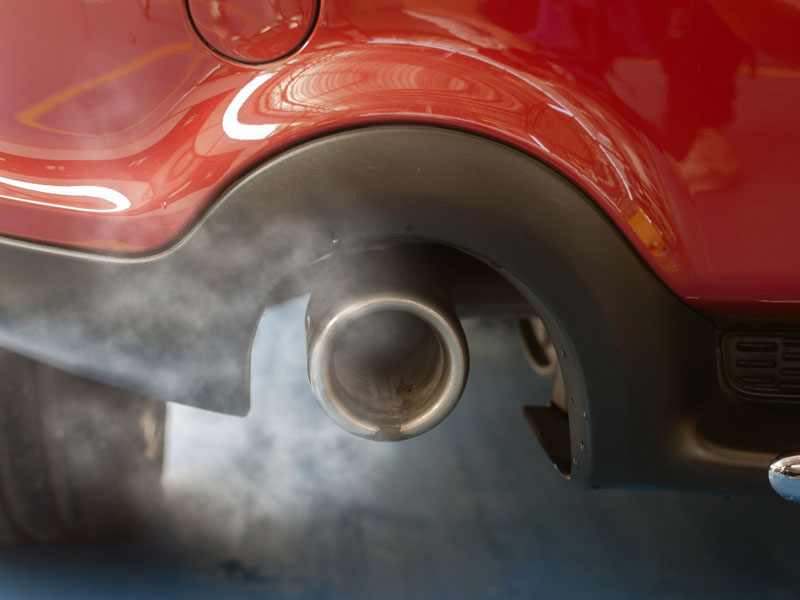
Noticing smoke coming out of your diesel vehicle when you accelerate can be a worrying thing. Whether you’re pulling away from a junction, accelerating on a motorway, or climbing a steep hill, seeing smoke coming from the exhaust can be a strong indication that your car's mechanics are not working as they should.
While diesel engines naturally produce more emissions than petrol engines, modern vehicles are designed to run with little to no visible smoke. If you’re seeing smoke from the exhaust, identifying the colour often points to what underlying issues there could be. This helps technicians identify and make any necessary repairs in an efficient and timely manner.
Black Smoke Under Acceleration
Black smoke is the most common type of diesel smoke and typically indicates a combustion issue. To put simply, the engine is receiving more fuel than it can burn which causes a rich fuel mixture, causing excess soot to be expelled from the exhaust. That means that when you accelerate and the engine demands more fuel, if the air-to-fuel ratio is off, the fuel wont burn completely, hence the black and at times odorous smoke.
What Causes Black Smoke?
- A clogged or dirty air filter restricting airflow
- Faulty or leaking fuel injectors
- A malfunctioning turbocharger
- Split or damaged intercooler pipes
- Faulty mass airflow (MAF) sensors
- Issues with EGR (Exhaust Gas Recirculation) system
- Diesel particulate (DPF) issues
As well as the smoke, you may experience poor fuel economy, sluggish acceleration, and reduced engine performance, or the engine management light turning on. Typically, black smoke is more so a warning sign that your cars engine is not running as it should be.
White Smoke Under Acceleration
White smoke is a little more difficult to diagnose as it can depend on when the smoke started and how long it lasts. A small amount of white smoke as you start your car on a cold winter morning is really nothing to worry about, however, persistent white smoke upon acceleration may indicate that fuel is not burning correctly or coolant is entering the exhaust chamber.
What Causes White Smoke?
- Faulty fuel injectors
- Glow plug problems
- Low engine compression
- Incorrect fuel injection timing
- Cracked cylinder heads
- A damaged head gasket
- Coolant leaking into the engine
There are a few niche ways to identify the type of white smoke it is. For example, if coolant is leaking into cylinders, the smoke will have a slightly sweet smell and be accompanied by coolant loss and/or engine overheating. Whilst white smoke that occurs during start up is nothing to worry about, continuous white smoke whilst accelerating is almost definitely a sign to take the car inspected as soon as possible.
Blue Smoke Under Acceleration
Blue or blue/grey smoke that occurs during acceleration is typically due to engine oil being burnt during combustion. Unlike black smoke, which is the result of excess engine fuel, blue smoke occurs when oil leaks into parts of the engine where it shouldn’t and combines with the fuel-air mixture. This type of smoke is typically more noticeable under acceleration because increased engine pressure and higher temperatures allows engine oil to pass through any worn seals or damaged components.
What Causes Blue Smoke?
- Worn piston rings
- Worn valve steam seals
- Turbocharger seal failure
- Excessive engine wear
- Blocked crankcase ventilation systems
- Damaged cylinder walls
Blue smoke is typically accompanied by increased oil consumption, a burning smell from the exhaust, or the engine oil light appearing on the dashboard. If oil is leaking into the engine, the diagnosis can vary from minor replacements to larger, more costly engine repairs, so it’s always recommended to have your car inspected at the first signs of blue smoke appearing.
Need Your Diesel Engine Checked?
If your diesel vehicle is producing black, white, or blue smoke under acceleration, it’s a good idea to have it inspected by a mechanic. Modern diesel engines can be complex systems, and accurately identifying the issue may require specialised diagnostic tools.
At Longmynd Service Station, we provide professional and comprehensive vehicle diagnostics, repairs, and services for a wide variety of diesel vehicles. Our experienced team can quickly identify the cause of the exhaust smoke and recommend the most effective solution to get your car back on the road in no time.